Upper back, shoulders, core and cardiovascular conditioning from a single rope.
Jumping rope delivers one of the most complete full-body workouts you will ever experience and the evidence backs it up. When you lace up your shoes and grab a rope, you are not just doing cardio — you are building the muscles of your upper back, shoulders and arms while your core works overtime to stabilize every movement. The trapezius, rhomboids and latissimus dorsi all fire as you keep your arms steady and your posture upright. Your pectoralis major and teres muscles join the effort, creating a chain reaction that strengthens your entire upper body with every single rotation of the rope. This is not some flashy exercise that looks impressive but delivers little in return. The science is clear: the thoracic spine and scapulothoracic muscles receive significant activation during proper rope work, making it a legitimate tool for building functional strength that translates into real-world movement.
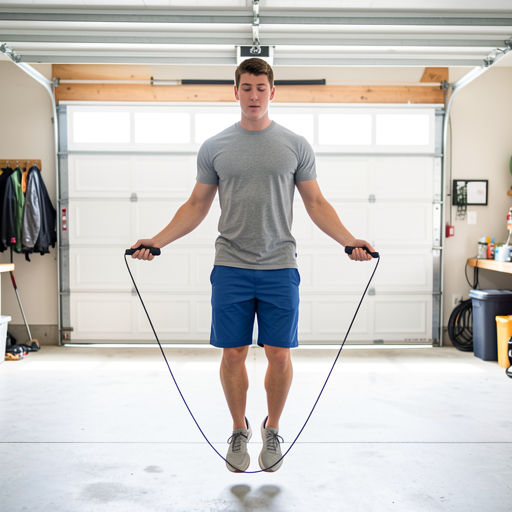
The beauty of this exercise lies in its accessibility and efficiency. You do not need expensive equipment or a gym membership to see incredible results from simply learning to jump rope with good form. Start by standing with feet hip-width apart, holding the handles close to your body and letting the rope arc behind you as you swing. Your elbows should stay tucked at your sides and the power comes from quick wrist flicks rather than wild arm swings. Your core stays braced throughout, protecting your lower back while your leg muscles absorb impact with each light bounce on the balls of your feet. Most beginners rush into long sessions and pay the price with sore shins or tired calves. Build gradually. Begin with five minutes of work broken into thirty-second bursts and let your body adapt over several weeks before pushing for longer continuous rounds.
🧔
Consistency matters more than intensity when you are building a jumping rope habit into your routine. Many people abandon the exercise after the first week because their arms feel unusually tired or their coordination feels clumsy. This is completely normal. Your nervous system is learning a new motor pattern and like any skill, it takes repetition to become smooth and automatic. Try varying your approach by mixing in high knees, alternate foot skips, or double unders once you feel comfortable with basic two-foot hops. These variations recruit additional muscle groups and keep the workout fresh. The serratus muscles around your shoulder blades also benefit enormously from the stabilizing demands of rope work, improving posture and reducing the kind of upper back stiffness that comes from sitting at a desk all day.
🥕
Beyond the physical gains, jumping rope offers a mental clarity that many other forms of exercise simply cannot match. There is something meditative about finding a rhythm and staying locked into it for several minutes at a time. You count the bounces, you feel your breathing and you lose track of the stress that piled up before you even stepped outside. This mental reset is just as valuable as the calorie burn or muscle engagement. Make it a habit to include a training jump rope two or three times per week alongside your regular training and you will notice improvements in coordination, endurance and upper body tone within a few weeks. The investment of time and effort pays back far beyond what you might expect from something as simple as swinging a rope over your head.
😛