Build lasting strength and endurance through resistance training paired with rope cardio.
Cardiovascular work and strength training don't have to compete for attention in your routine — they complement each other beautifully. When you build a solid foundation of resistance exercises, you create a stronger, more resilient body that handles any activity with confidence. Start with compound movements like squats, focusing on form before adding load. Lower yourself slowly with your weight distributed evenly through your midfoot, keeping your chest up and core braced. The slow, controlled tempo you apply to every rep teaches your muscles to work under constant tension, which builds real strength. Pair this deliberate approach with rope work and you will notice improvements in coordination, balance and endurance that no machine can replicate.
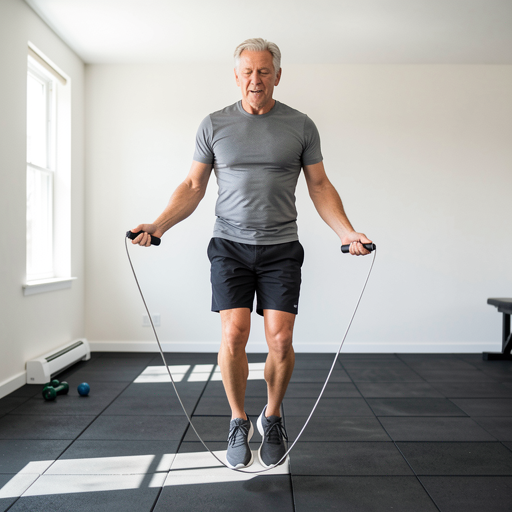
The rhythmic nature of a training jump rope also trains your nervous system to fire more efficiently, making your lifts feel smoother over time. Your back and arms deserve equal attention in any well-rounded program. Cable lat pulldowns and rows are exceptional for developing the upper body, but they require patience and discipline. Grip the bar or handle with a firm yet relaxed grip, pull through the movement with intention and resist the urge to rush. For pulldowns, draw the bar down about two to three inches below chest level, squeezing your lats at the bottom before returning with control. Cable rows work the same muscle groups from a different angle — keep your chest and chin aligned, avoid jerking your torso and let your arms follow the movement rather than leading it.
🦈
Many lifters skip the small details here, but those details are exactly what separate beginners from those who see lasting results. Don't overlook rope work as a way to keep your heart rate elevated between sets; it keeps your metabolism firing and adds a conditioning element that pure lifting alone cannot provide. Triceps, biceps and shoulders can be targeted effectively with cable work once you understand the mechanics. Cable pushdowns build the triceps when you keep your elbows pinned to your sides and drive the bar downward until your arms are nearly straight. Cable Zottman curls challenge the biceps, forearms and trapezius simultaneously — raise the weight with palms facing up, rotate at the top and lower with palms facing down. Twelve controlled repetitions are far more effective than grinding out twenty sloppy ones.
🤴
Your body responds to quality, not quantity. When you add a rope session into the mix, you give yourself a full-body benefit that reinforces everything you are doing in the gym. To skip effectively, focus on keeping your elbows close to your body and letting your wrists do the work rather than swinging your arms. The most sustainable fitness approach combines consistency with variety. Rotate between pushing movements, pulling movements and lower body work. Keep your exercise tempo deliberate — slow eccentric phases build more muscle than fast, uncontrolled reps.
🤸🏽♀️
Make sure you rest between sets, hydrate properly and track your progress so you can see how far you have come. Rope work delivers benefits that extend well beyond calorie burning; it improves footwork, ankle stability and mental focus. Try finishing two or three workouts per week with ten to fifteen minutes of rope work and watch how your overall athleticism improves. The strength you build in the weight room will make every jump feel lighter and the cardio you develop on the rope will help you push harder during your sets. This is the kind of balanced approach that keeps you coming back to training year after year.


