Master proper technique and discover the cardiovascular benefits of jump rope exercise.
Jumping rope has been recognized as one of the most efficient cardiovascular exercises available to people of all ages and fitness levels. This simple yet profoundly effective activity requires minimal equipment, can be performed virtually anywhere and delivers comprehensive full-body conditioning that rivals many expensive gym routines. When you commit to jump rope regularly, your heart rate climbs into the optimal training zone while your legs, shoulders, arms and core all engage simultaneously. The rhythmic nature of the movement creates a meditative quality that many practitioners find deeply calming, even as their bodies work intensively. Beyond the obvious cardiovascular benefits, the activity dramatically improves coordination, balance and proprioception through the complex neural patterns required to maintain consistent rhythm and timing, and it serves as an excellent warm-up for jumping rope sessions at any intensity.
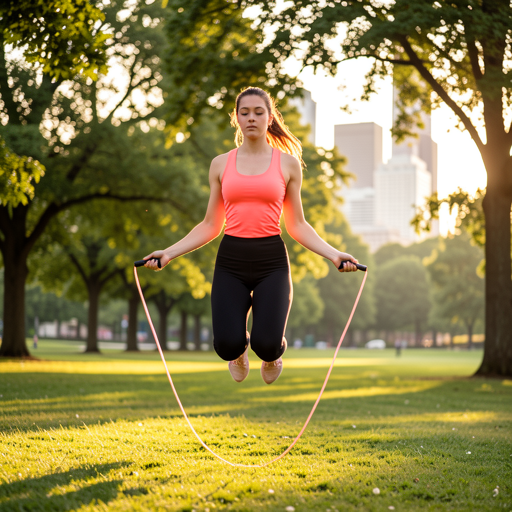
The history of rope skipping stretches back thousands of years, with evidence of similar activities appearing in ancient Egyptian manuscripts dating to approximately one thousand nine hundred years before the common era. Norse warriors reportedly used weighted stick exercises that closely mirrored modern jump rope techniques, while naval crews incorporated the activity into their regimens to maintain condition during long stretches at sea. The modern jump rope exercise gained tremendous popularity in the nineteen fifty and nineteen sixties through the Double Dutch phenomenon in New York City neighborhoods, where young people developed increasingly sophisticated variations that transformed a simple fitness tool into a cultural art form. Today, competitive speed skipping events draw athletes from around the world who push the boundaries of what human beings can accomplish in a single minute.
🍀
Mastering proper technique matters enormously when learning to jump rope with a training jump rope, yet many beginners skip this crucial foundation and immediately launch into frantic efforts that quickly lead to frustration and abandonment of the activity. The ideal starting position places your feet hip-width apart with knees slightly softened rather than locked, arms relaxed at your sidesand elbows positioned comfortably close to your ribs. From this athletic stance, your wrists do the work, generating small circular motions that keep the rope moving smoothly overhead while your feet execute light, bouncing steps on the balls of your feet. Many newcomers bounce too high and expend unnecessary energy, when in fact the rope should pass beneath feet that barely clear the ground by an inch or two. Your gaze should rest on a fixed point ahead rather than down at your feet, which naturally aligns your spine and promotes the upright posture that efficient movement requires.
🗽
Integrating rope skipping into a comprehensive fitness program yields remarkable results that extend far beyond simple calorie burning and weight management. Athletes across all sports incorporate the exercise into their training regimens because it develops the fast-twitch muscle fibers and reactive tendon stiffness that translate directly to improved sprinting speed, vertical jumping ability and agility on the field or court. The impact forces generated during jumping stimulate bone density improvements in the legs and hips, potentially offering long-term protection against osteoporosis and related skeletal conditions. Beginners should start with brief sessions of merely five to ten minutes, gradually building tolerance as their calves, ankles and cardiovascular system adapt to the unique demands. As your endurance grows, you can experiment with different rope speeds, incorporate crossover variations or practice complex footwork patterns that keep the activity fresh and engaging while continuing to challenge your neuromuscular system in novel and rewarding ways that make consistent exercise feel less like obligation and more like genuine enjoyment.
⚓